Has Cancer Treatment Really Improved? A 30-Year Reality Check
Despite decades of innovation and billions spent on research, the harsh truth remains: cancer is still one of the leading causes of death worldwide.
We’ve witnessed the development of:
- Chemotherapy drugs like Paclitaxel (1996) and Imatinib (2001)
- Targeted therapies such as Bevacizumab (2004) and Abiraterone (2010)
- Immunotherapies including Ipilimumab (2011) and Keytruda (2014)
- Advanced radiation techniques like IMRT (2000) and Proton Beam Therapy (2015)
Yet the overall number of cancer deaths continues to climb.
📊 A Chart I Created — 30 Years of U.S. Cancer Data
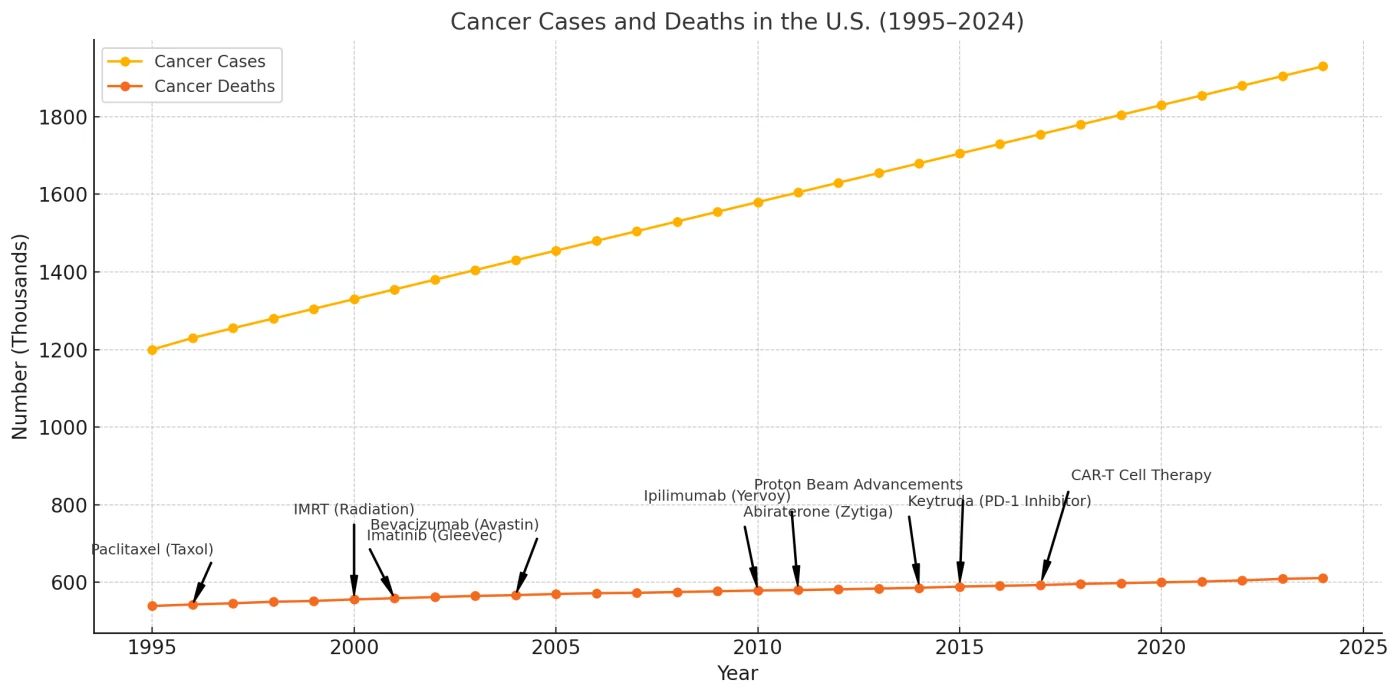
To explore this question objectively, I compiled and visualized 30 years of cancer data in the United States. The chart below illustrates the number of new cancer cases and cancer-related deaths annually from 1995 to 2024, alongside arrows marking the introduction of major treatments.
While death rates per 100,000 people have slightly declined — often cited as evidence of progress — the absolute number of deaths has increased. This means more individuals are developing and dying from cancer today than three decades ago.
📌 Why Is This Happening?
The medical model has largely focused on attacking the tumor through toxic or highly targeted interventions, rather than understanding the root terrain that allows cancer to grow in the first place.
True progress requires shifting the paradigm:
- From tumor-centered thinking to terrain-centered strategy
- From treating late-stage disease to preventing early dysfunction
- From relying solely on pharmaceuticals to integrating metabolic, immune, and nutritional therapies
💡 What Needs to Change
We must address:
- Mitochondrial dysfunction and abnormal cell metabolism
- Chronic inflammation and immune exhaustion
- Nutrient depletion, insulin resistance, and oxidative stress
- Environmental and lifestyle toxins that accumulate silently
Until we correct the internal terrain, new drugs will only offer temporary delays — not cures.
✅ My Work
As a metabolic health consultant focused on targeted metabolic cancer therapy, I use structured, evidence-based protocols that include:
- Fasting and ketogenic dietary strategies
- Repurposed non-toxic drugs
- Detoxification and mitochondrial support
- Immune modulation and natural anti-cancer compounds
I don’t see the medical system adopting these strategies anytime soon. The current model is deeply rooted in pharmaceutical and intervention-based solutions, often overlooking the metabolic, immune, and lifestyle factors that lie at the core of the disease.
My hope is that people become aware that alternatives do exist—approaches that aim to restore the body’s internal balance, not just suppress symptoms. If patients understand what cancer really is and where it comes from, they can make informed decisions—and often, choose solutions that offer not only longer life but better life.
Dr. Yahia Anane.