Understanding the success rate of Targeted Metabolic Therapy over time
First, we have to make clear that there is always hope.
We’ve seen remarkable recoveries even in stage 4 and hospice cases — when the right protocol is applied with full commitment.
Metabolic therapy works at every stage, but the chances are highest when we act early — before the system collapses.
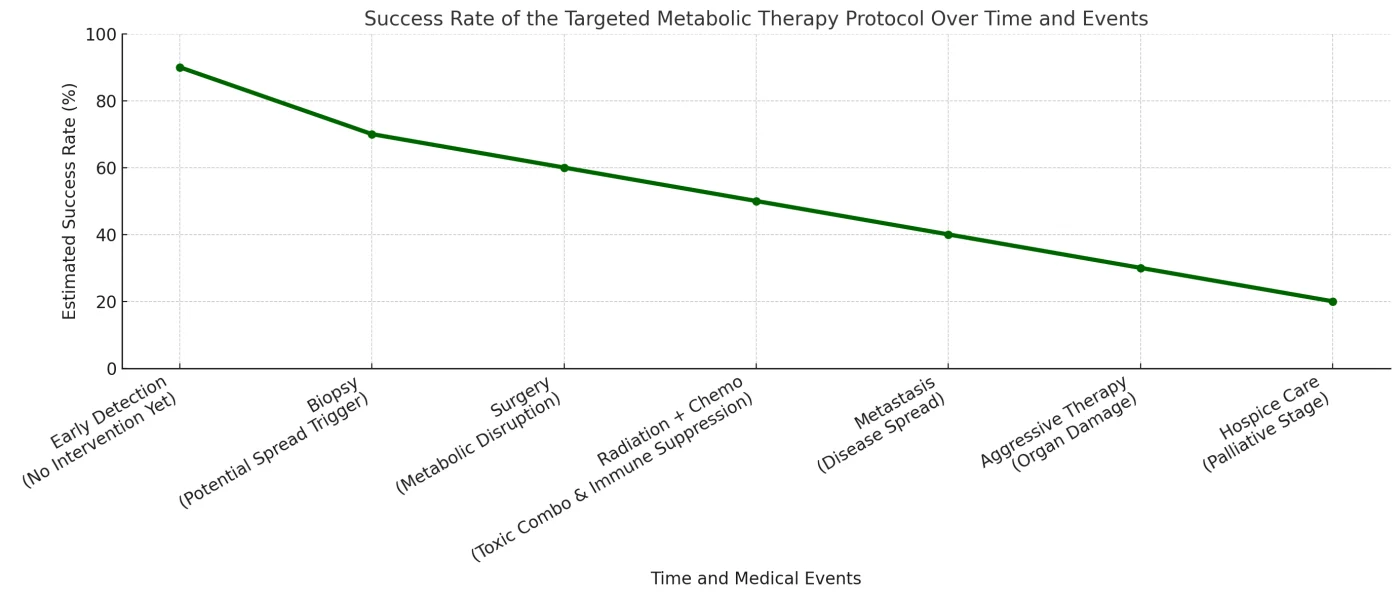
This chart shows how the effectiveness of metabolic therapy drops as conventional cancer interventions progress.
It’s not because the therapy itself becomes weaker — it’s because the body becomes more damaged and resistant with each step.
Starting at 80-90% success with early detection, the rate drops after:
- Biopsy – May trigger spread by disturbing the tumor microenvironment.
- Surgery – Causes trauma and metabolic disruption, which feeds aggressive cancer cells.
- Radiation + Chemo – A toxic combo that not only kills cells but also weakens the immune system.
- Metastasis – Cancer is no longer local. It spreads systemically and becomes harder to target.
- Aggressive therapy – High-dose toxicity damages organs and further suppresses immune function.
- Hospice care – Focus shifts to palliative, not curative, making late-stage recovery extremely difficult.
The longer you wait or the more damage is done, the lower the success rate becomes.
This is why early action with non-toxic, metabolic approaches is critical. Don’t wait until the body is overwhelmed.
Cancer is beatable — but the window to act is narrow.